The emergence of the village
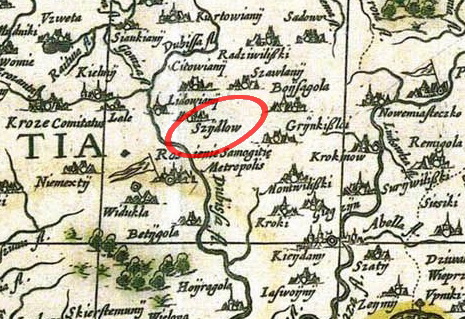
Historical sources show that the first place name of Šiluva was Būda. This name refers to the place where forest trees were processed for the Grand Duke's treasury. The felled trees were used to make planks for barrels and buildings, and to burn tar, pitch and ash. The processed material was shipped to designated ports. Šiluva was well suited to such forestry work, as it was close to the Dubysa River, which could be used to transport material to the Nemunas River, and from there to the ports of Königsberg and Danzig.
A town between a village and a manor
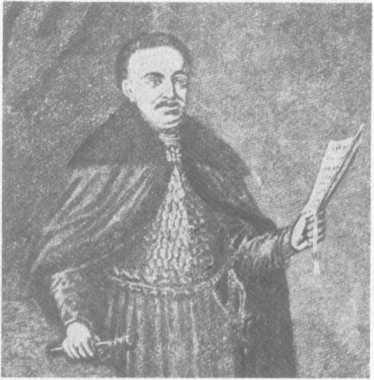
Thus, a manor was established in the village of Buda near Jurgis Gedgaudas, which was inherited by his son Petras Simonas Gedgaudas. This landlord became the founder of the church in Šiluva.
The act of foundation of the church was drawn up and sealed in the presence of witnesses and trustees on the Sunday after St. Lambert's Day (1 September) in 1457, in the manor of Šilo or Buda.
„In the name of the Lord. Amen. The memory of all events disappears and does not reach human eternity unless care is taken to fix it with writings and seals. Therefore I, Peter Gedgaudas, the father of the Geishas, desiring to do good works while I am still alive, lest my stepmother's death should strike me with a sudden blow, and desiring to help the salvation of my own and my legitimate wife's souls, and, moreover, while I am still alive, desiring to by means of the good things left by my predecessors, to relieve my soul from what is oppressive to it, being of sound mind, of sound mind, not compelled, nor influenced, nor deceived by any evil will, but only of my own good will, by my own free resolution, and by the consent of my friends, do I establish at Shiloh, or Buda, the church of St. In honour of St. Mary, St. Peter, St. Bartholomew and the patron saints. In order that the Catholic rector of that church, who will serve and govern it, may be provided with subsistence and clothing, I record and bequeath and give to the first, second, third, etc., whoever shall first, second, third, etc., reside therein, first, the soil of the church, and the rest of the land, for eternity...“
When he signed the deed of foundation, he entered the name of the estate „The Shiloh, or The Shack“. This „or“ indicates that the old name has already been replaced by the new one. The change was necessary to distinguish one Buda from another, as at that time there were about 45 such place names in Lithuania. In 1466, less than a decade after the foundation of the church, a local priest signed „Jonas, pastor of Šilo“. This is how the name of the town gave rise to the present name of Šiluva.
From this, the nobleman of the village of Šilo, Petras Simonas Gedgaudas, bequeathed ten families with movable and immovable property and their rightful lands to the new church. The church was built on the land of the manor, and the town began to develop. It was named after the rare and probably the first church in Lithuania of that time, the Church of the Holy Trinity. It was the first and the first in Lithuania to bear the title of the Nativity of the Virgin Mary and the patron saints Peter and Bartholomew. It is believed that Petras Gedgaudas may have been trying to link the date of the feast of the Nativity of the Virgin Mary (celebrated on 8 September) to the coronation of his father's companion Vytautas the Great, which was to take place on 8 September 1430.
After the church was given the name of the Nativity of Mary by the will of the builder and the titular feast was granted, it became famous. Hordes of pilgrims from the remotest corners of Lithuania and even from the Protestant-dominated region of Transnistria used to flock to this feast.
About a century later, in 1551, Martynas Mažvydas, the pastor of Ragainiai, in a letter to Duke Albrecht of Prussia, complains that his parishioners, Lithuanians, are not used to priests of the new faith, are loyal to the „papists“, and go to Lithuanian churches, including to the feast of the Venerable Virgin Mary in Šiluva, to celebrate the feast, thus committing an „abomination of idolatry“. And Šiluva is almost a hundred kilometres away from Ragainiai!